The space
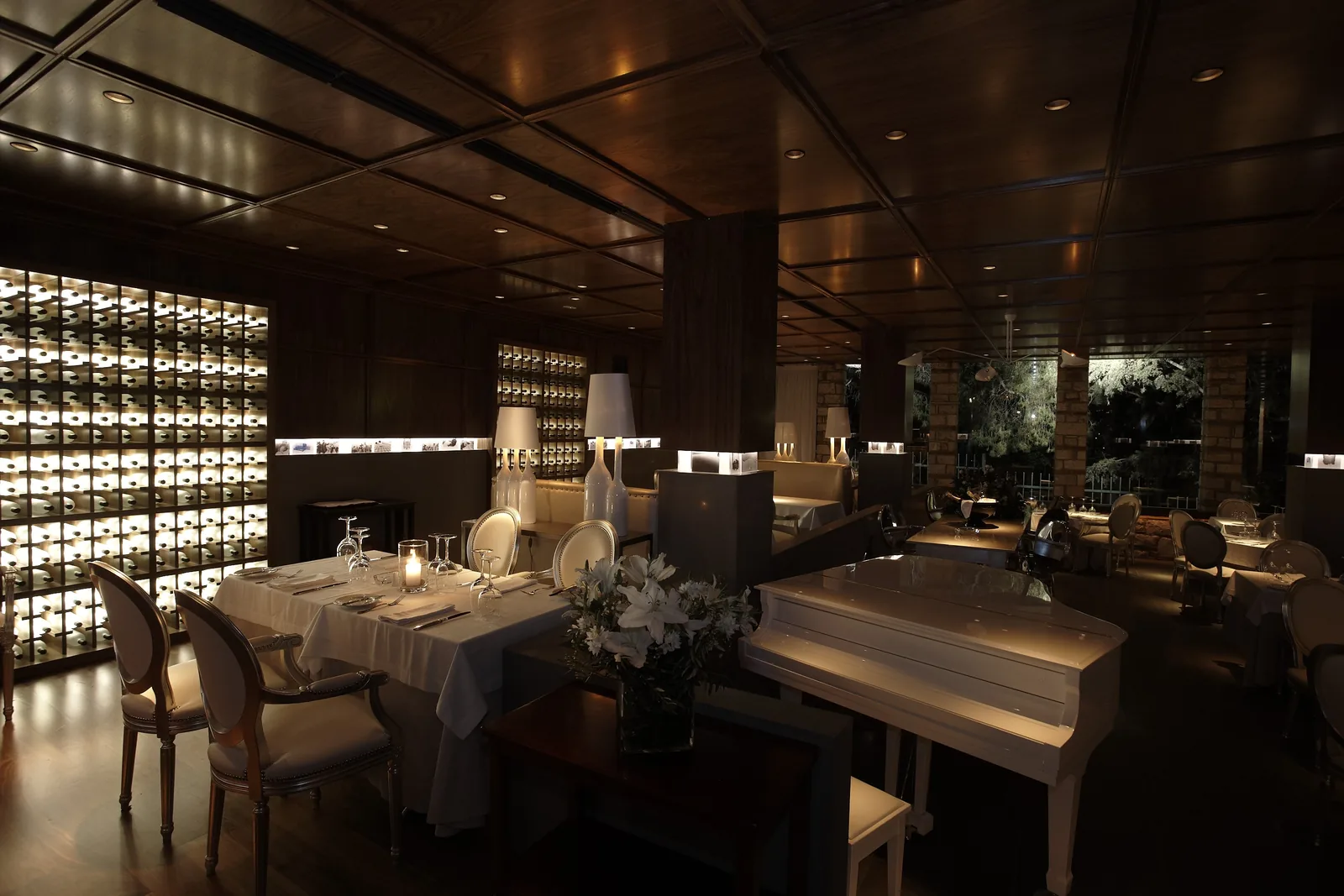
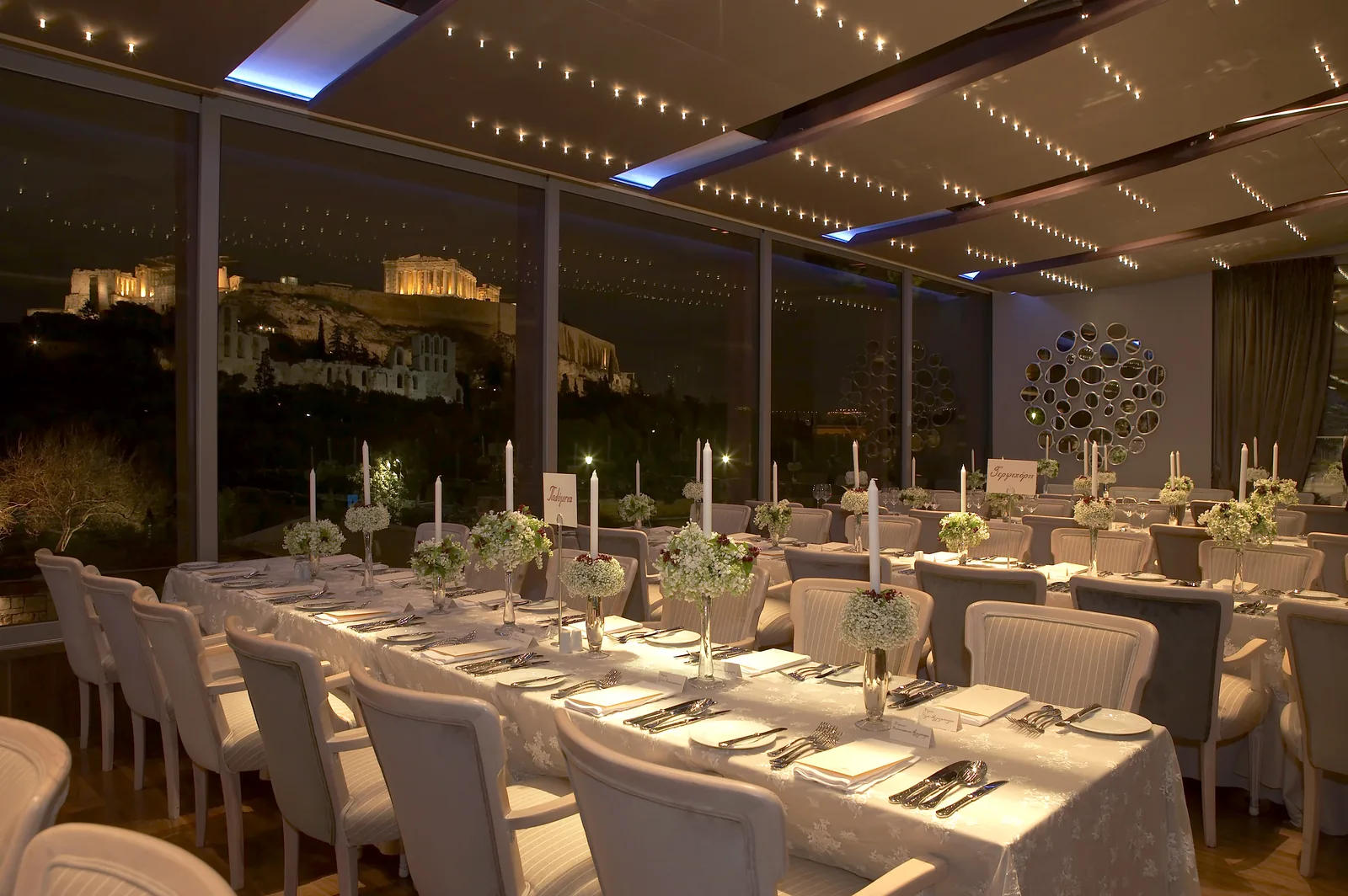
Dionysos Zonars sits directly opposite the Acropolis, which sets the whole problem. The floodlit monument is the brightest thing any guest will look at all evening, and every decision inside the restaurant had to protect that view rather than compete with it. Light the room too generously and the glazing goes reflective; the Acropolis disappears and guests are left looking at a lit ceiling.
How it is lit
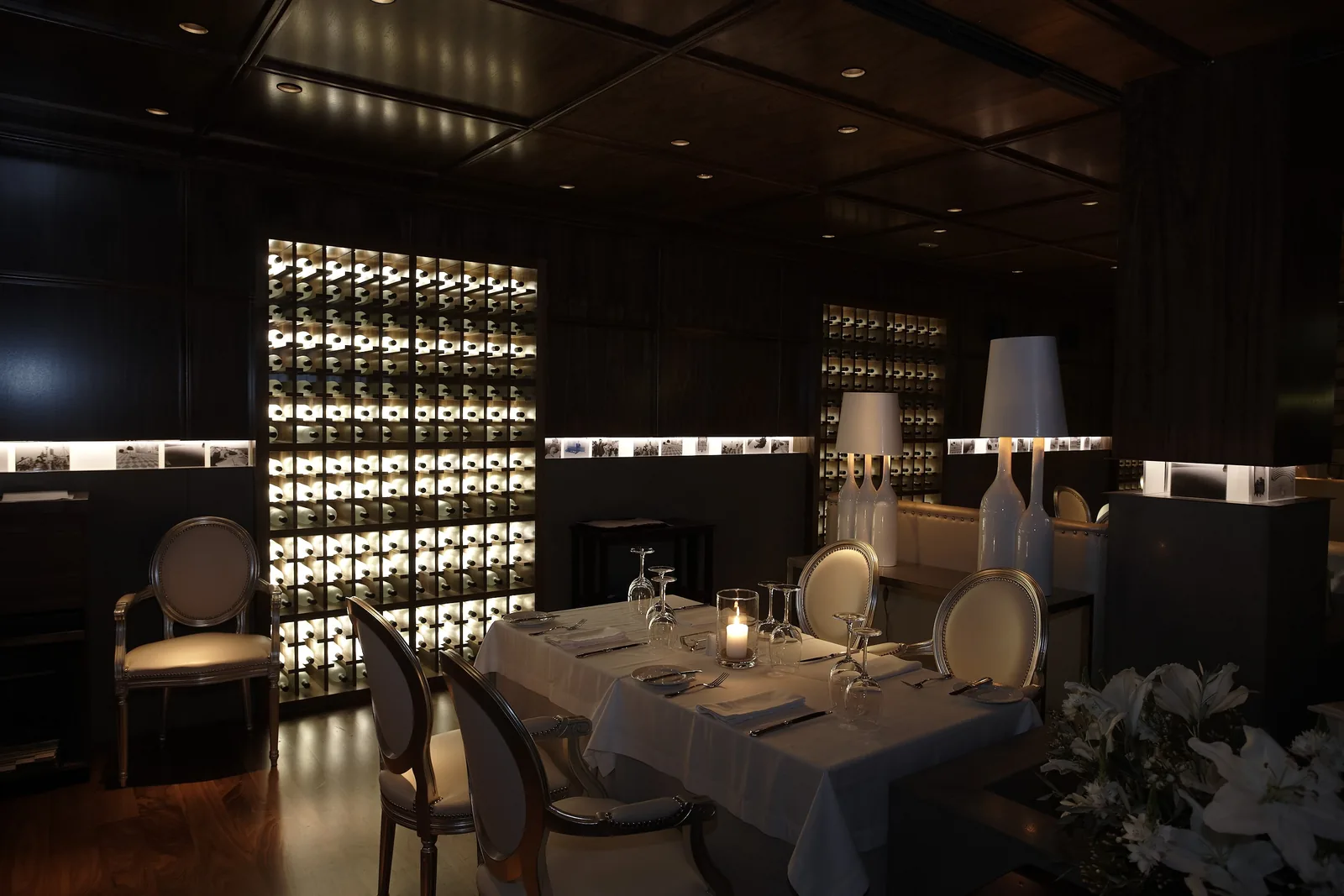
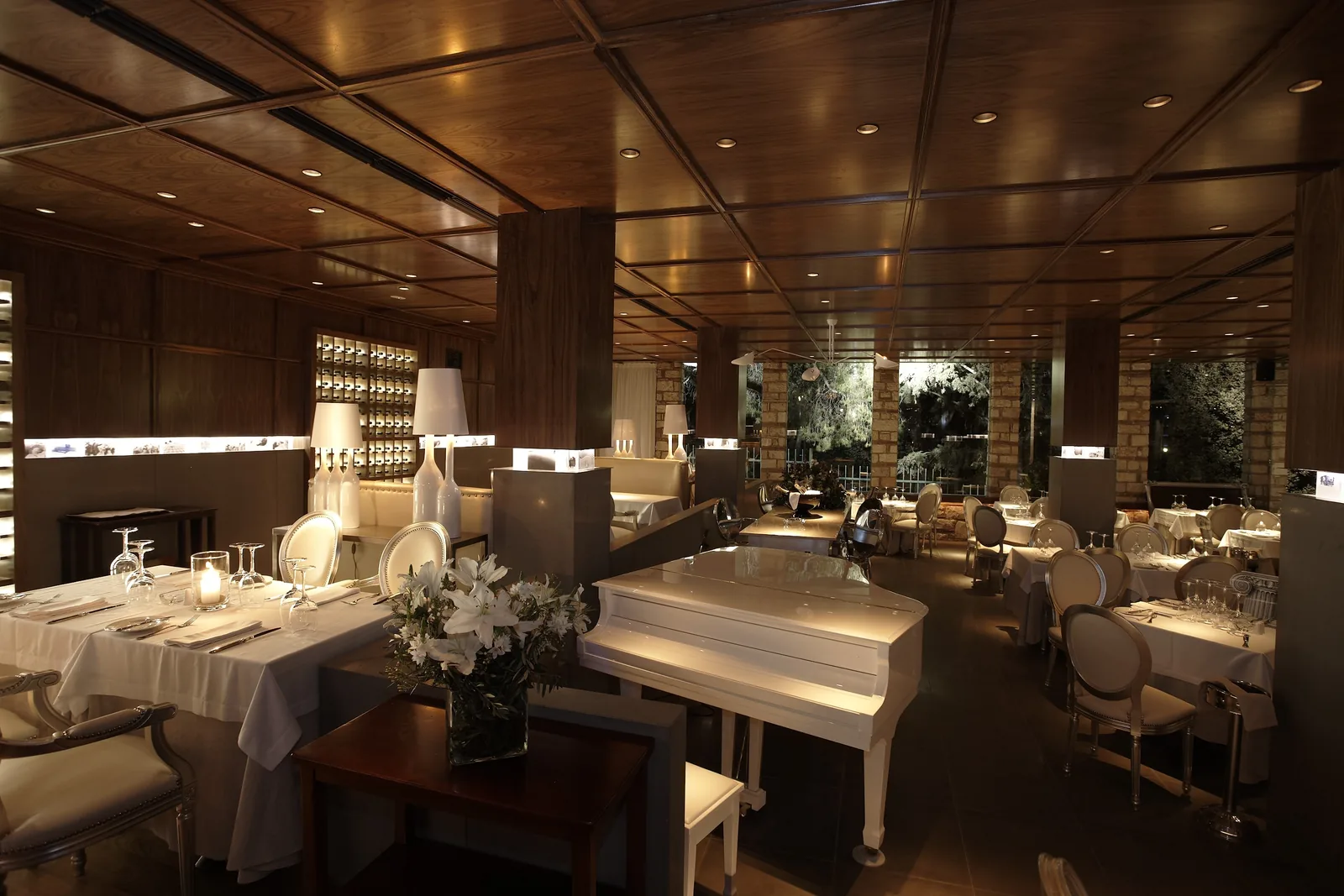
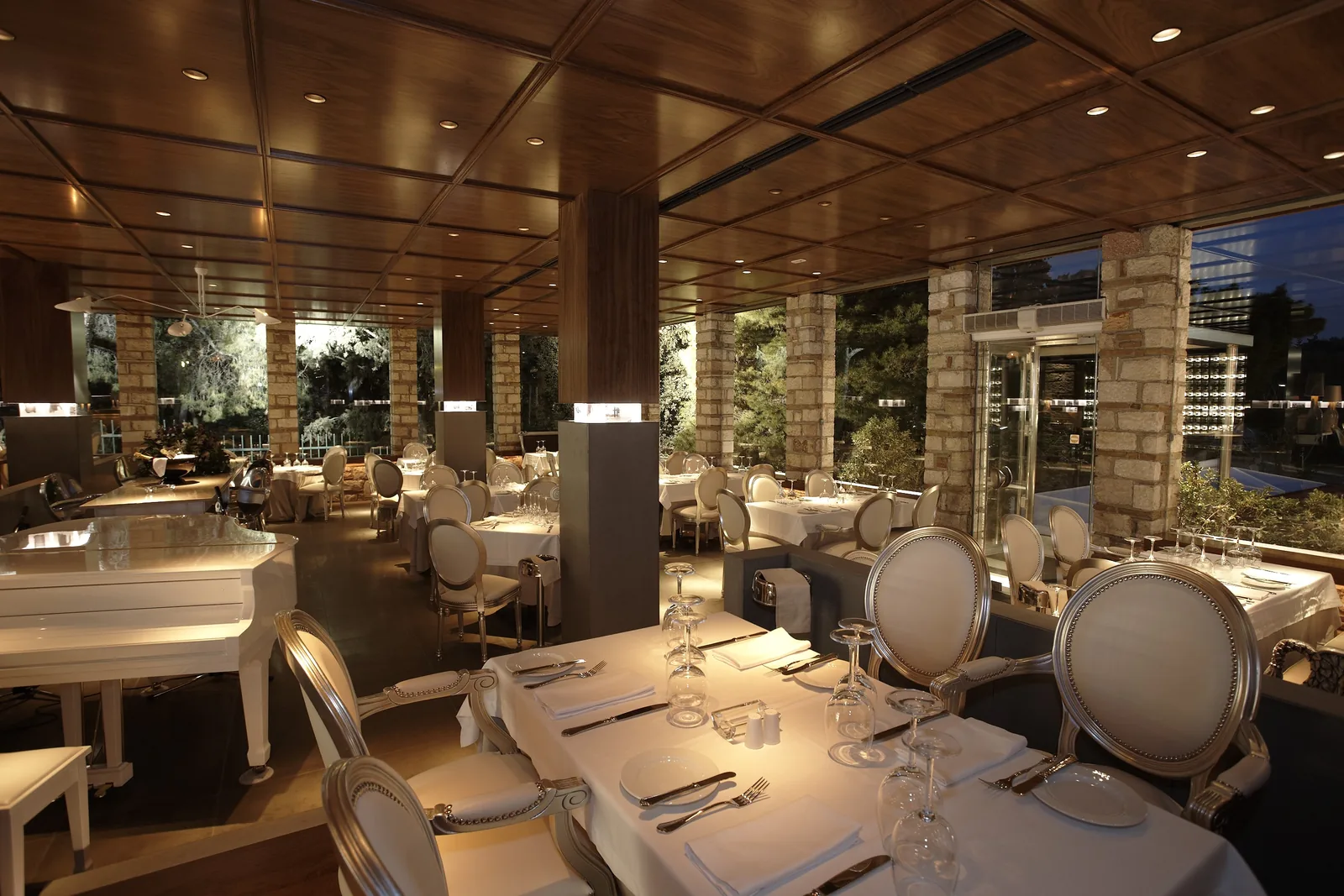
The answer was to keep the ambient level deliberately low and put the light only where it is needed. A coffered timber ceiling carries a grid of recessed downlights, each aimed so its pool lands on a table rather than the floor — white linen becomes the brightest surface in the room while the circulation stays dim. A continuous warm cove traces the ceiling perimeter, lifting the timber just enough that the room does not feel like a cave, and shaded table lamps add a second, lower tier of light at seated height.
A night sky of its own — one that never brightens the glass.
The star ceiling
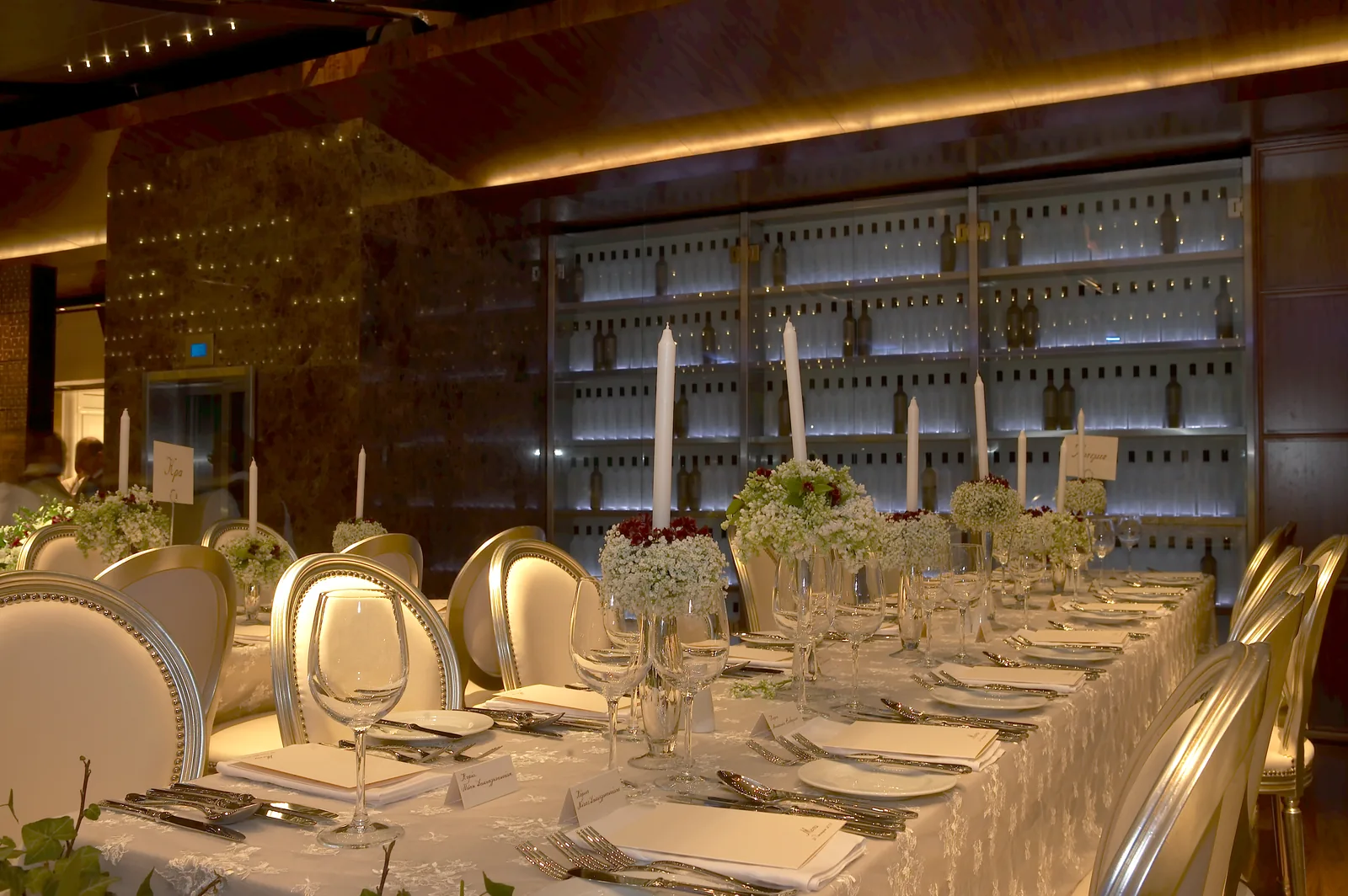
The signature move is a custom fibre-optic star ceiling: hundreds of pinpoints set into the soffit and carried down across a stone-clad column, so the ceiling reads as depth rather than as a surface. Over the banquet tables it gives the room a night sky of its own — one that never brightens the glass, so the real sky, and the Acropolis beneath it, stay the brightest things in view.
The wine
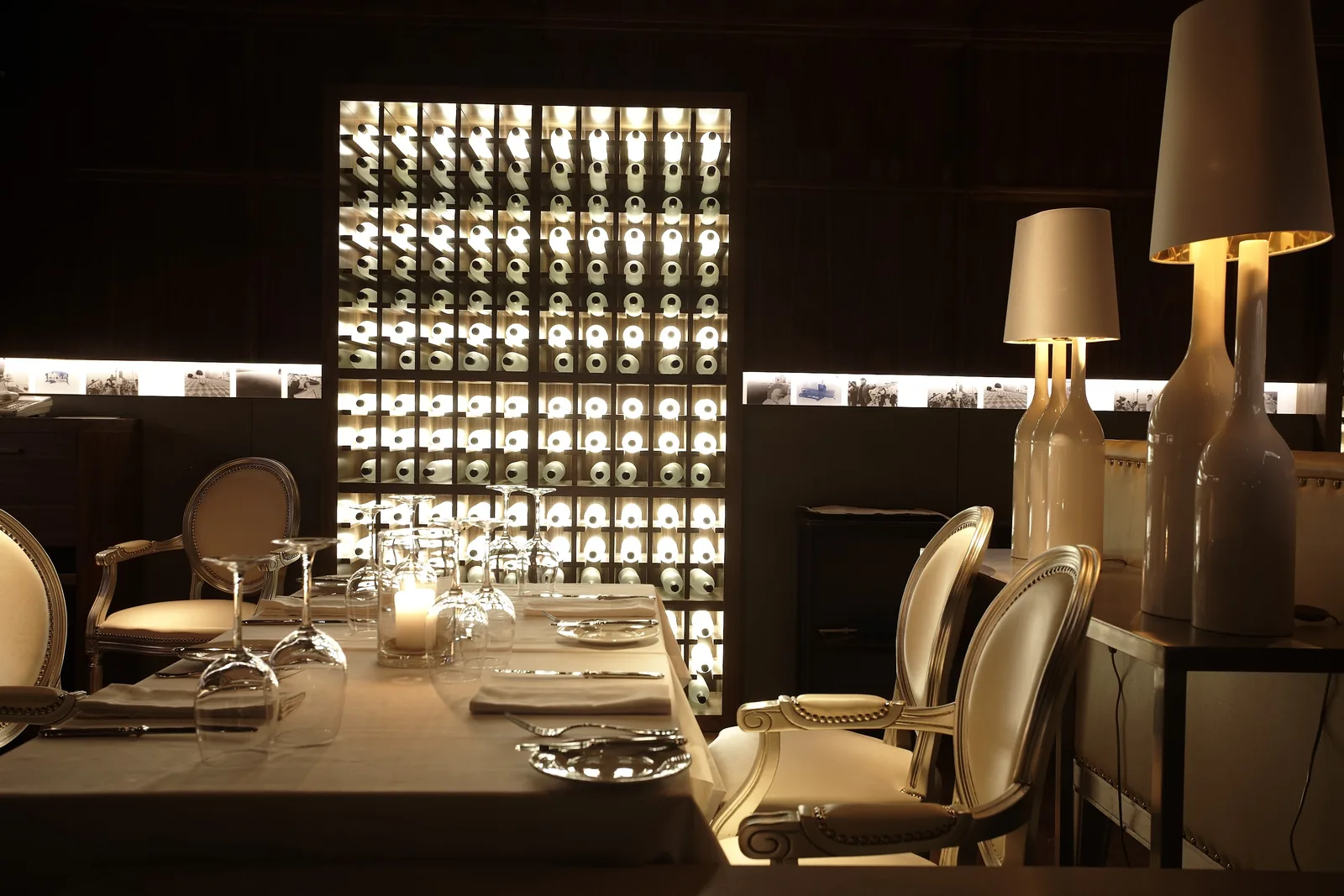
Wine is displayed two ways, and lit two ways. In the private dining room a long wall of bottles is backlit in cool white — a single, deliberate temperature break against all the surrounding warmth. In the main room the display is backlit warm instead, as a tall wall beside the grand piano and as freestanding towers between the tables, turning the bottles into glowing columns that give the eye somewhere to rest between the tables and the view.