The space
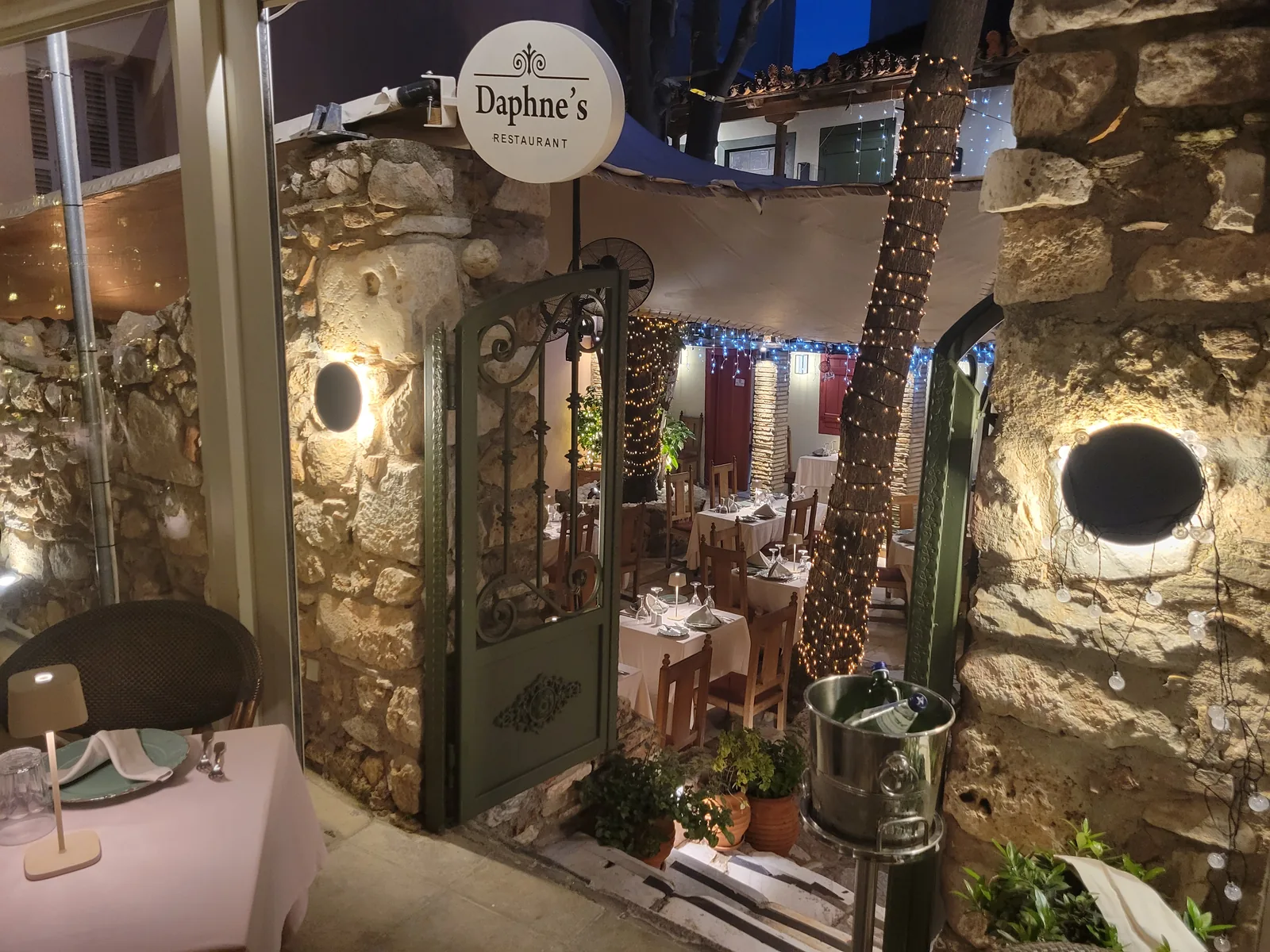
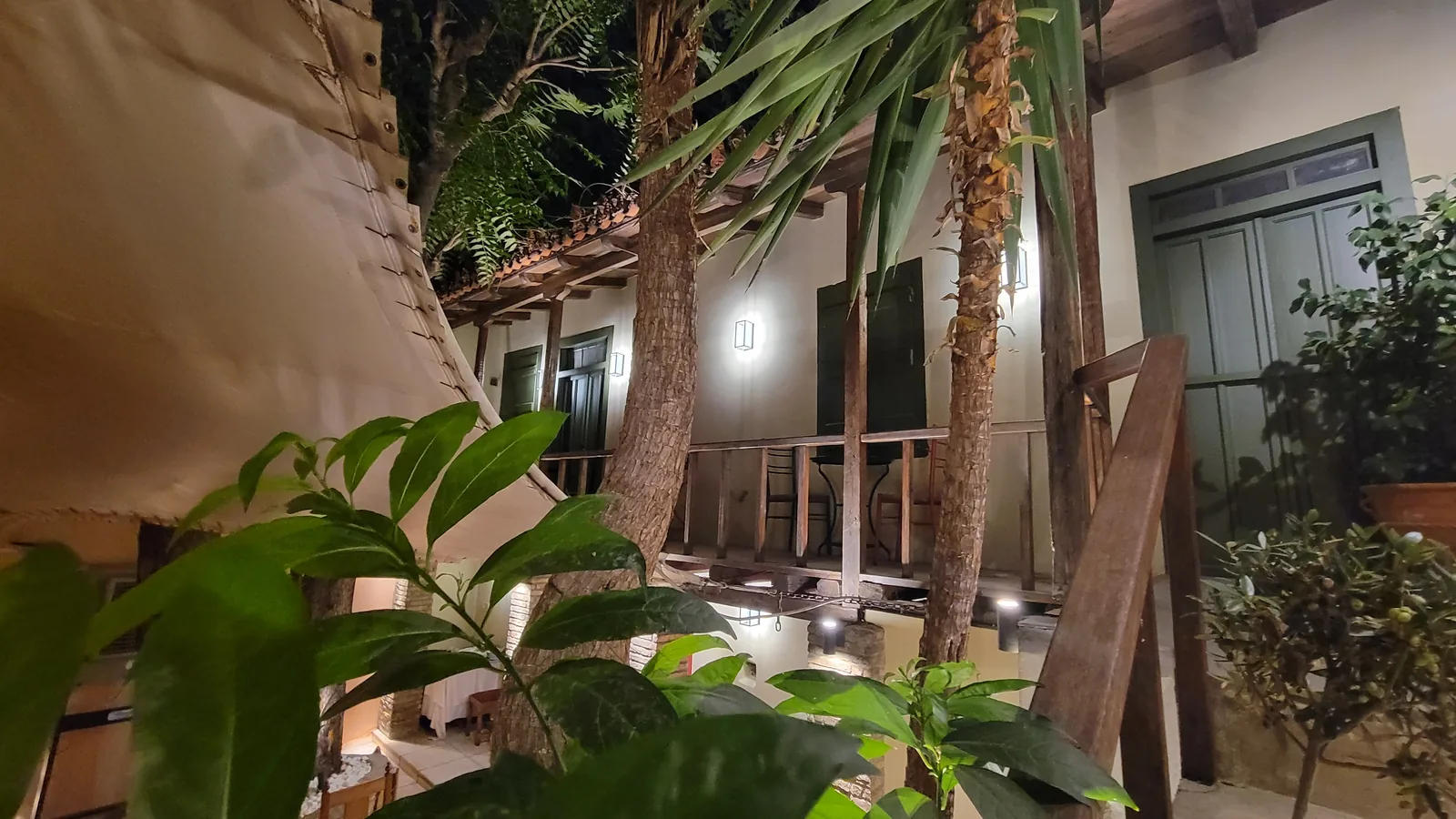
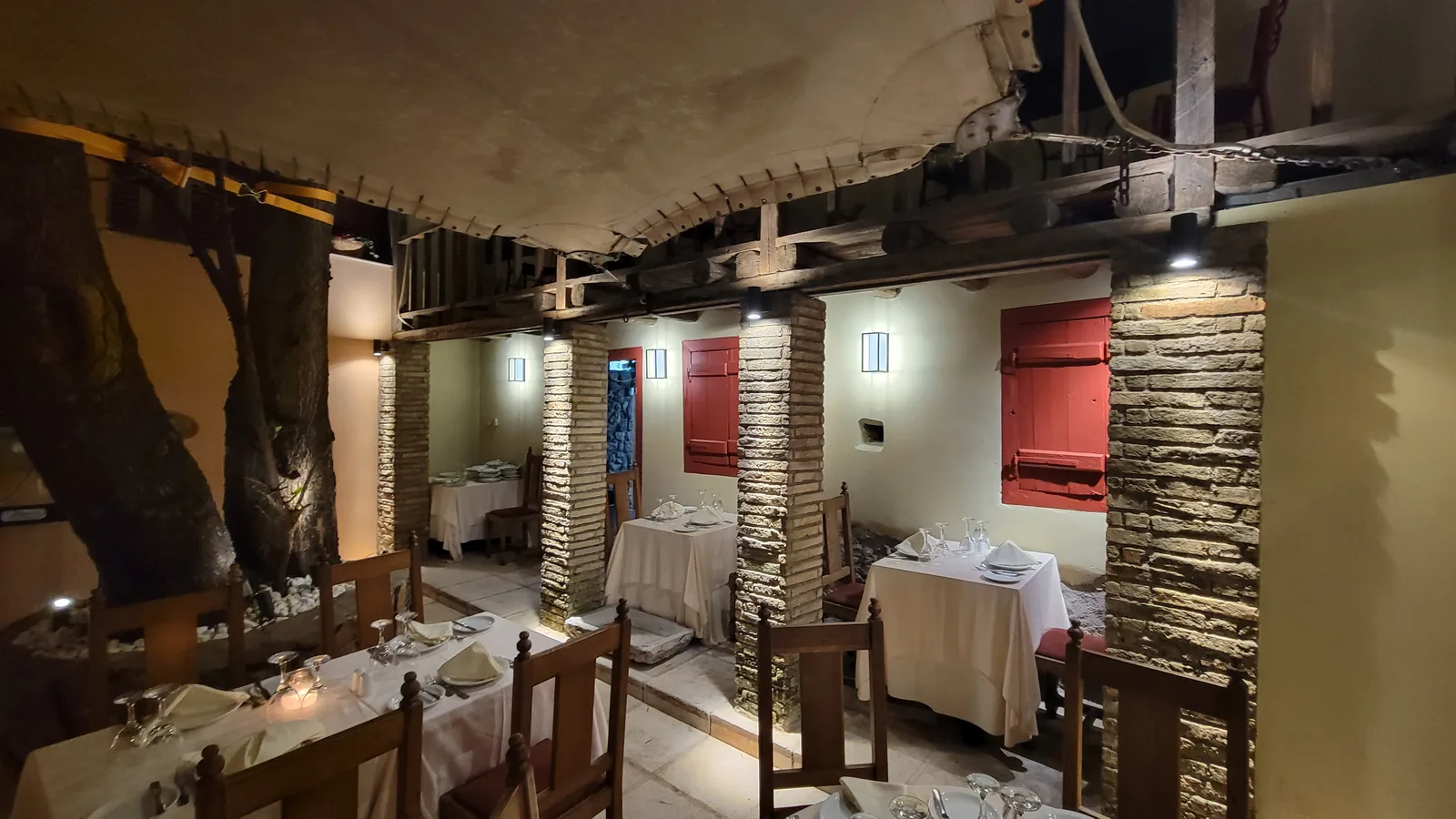
Daphne’s sits in a Plaka courtyard, enclosed by old stone walls with a stretched canopy overhead and trees growing up through the middle of the room. The building is the attraction, and the brief the architecture sets is simple: light the stone, not the diners. A courtyard this size lit conventionally from above would flatten the walls into a backdrop and lose everything that makes it worth sitting in.
How it is lit
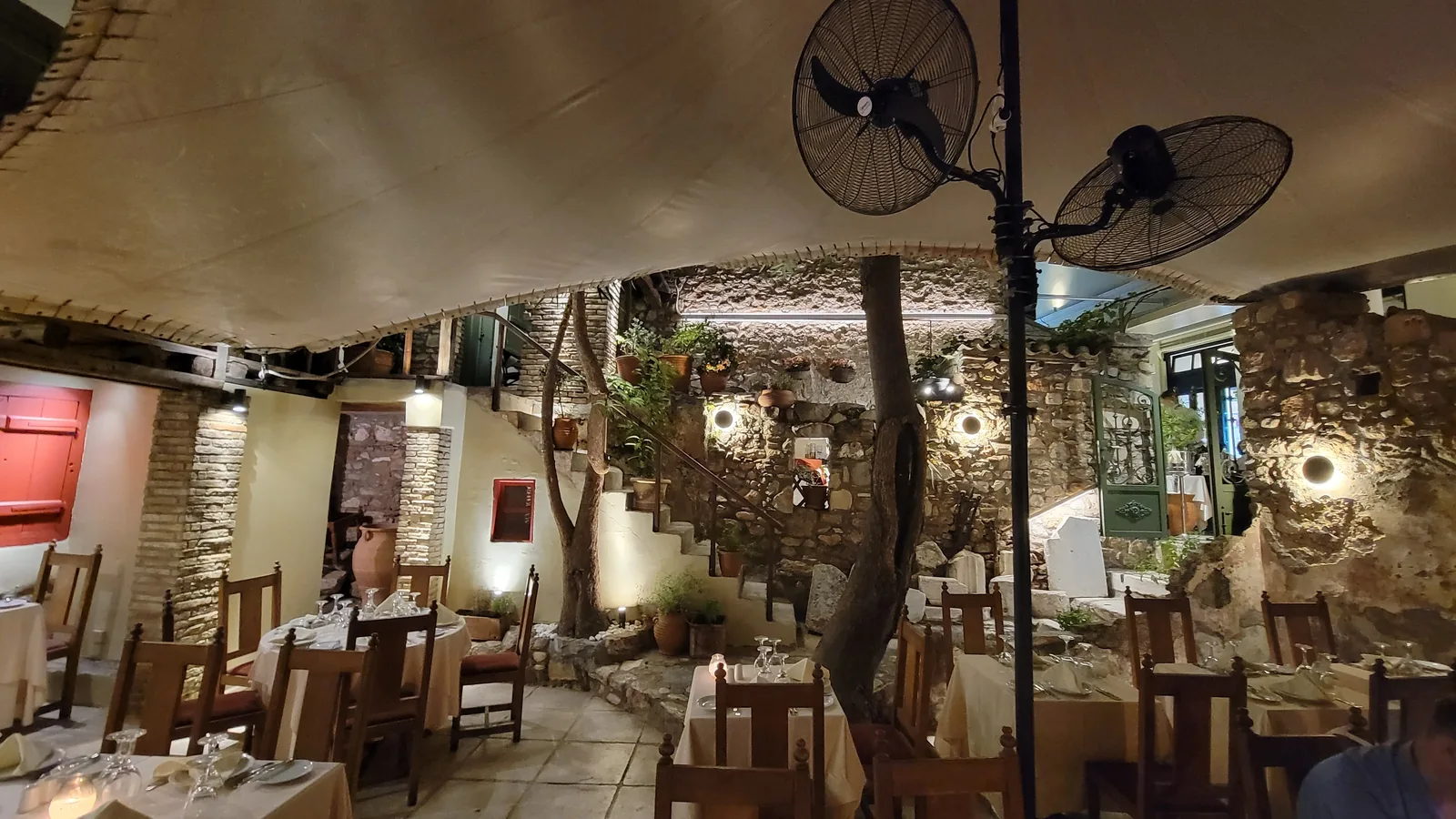
Round wall-mounted luminaires are set directly against the masonry and graze light across it at a shallow angle. That angle is the whole technique — light striking stone almost parallel to its face throws every joint and irregularity into relief, so a wall that reads as flat by day becomes textured at night. The fixtures themselves are dark discs that disappear against the stone. Where the canopy is carried on stone columns, small uplights at their bases do the same work vertically, so each column reads as a shaft of textured stone rather than a dark post.
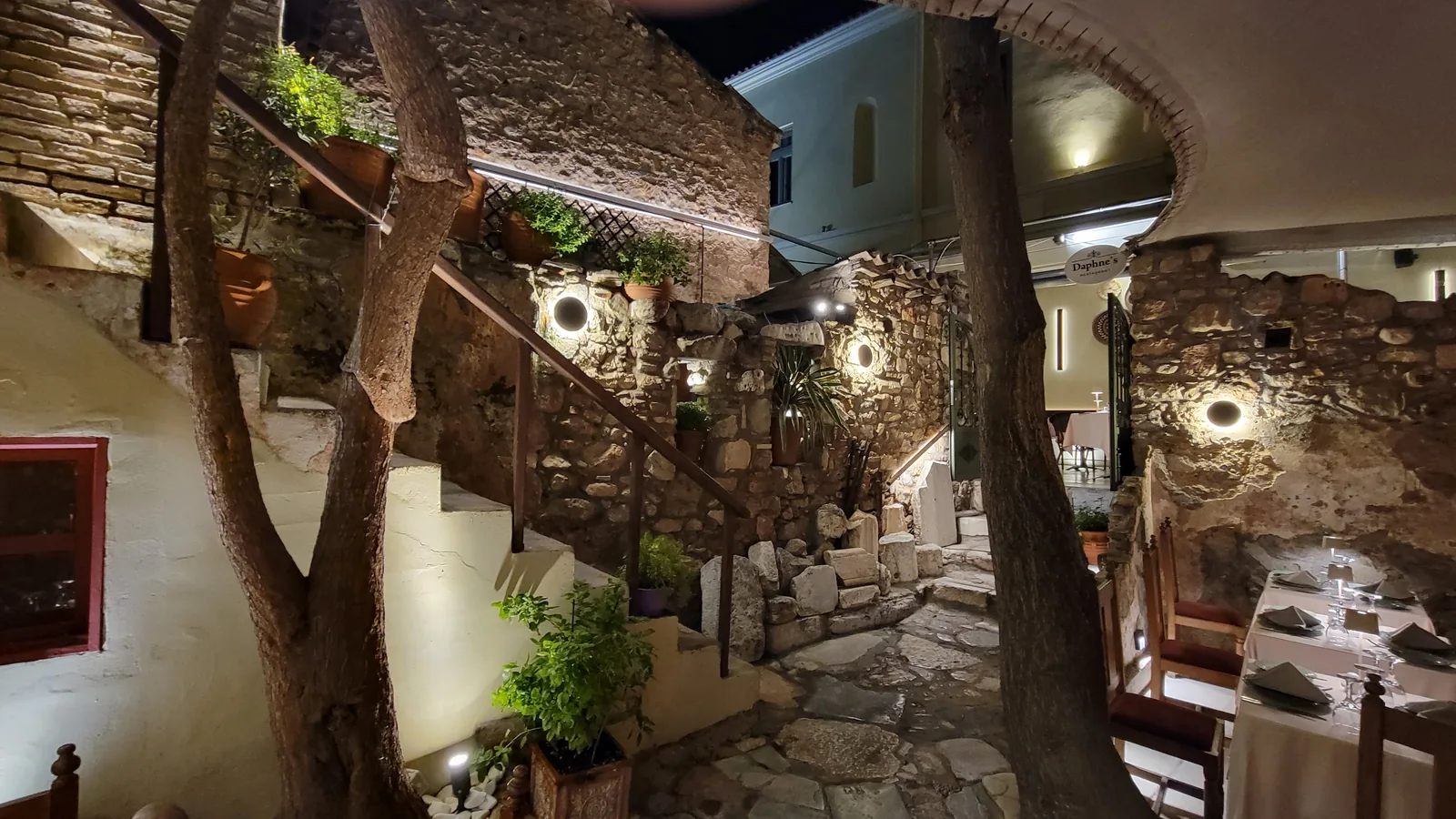
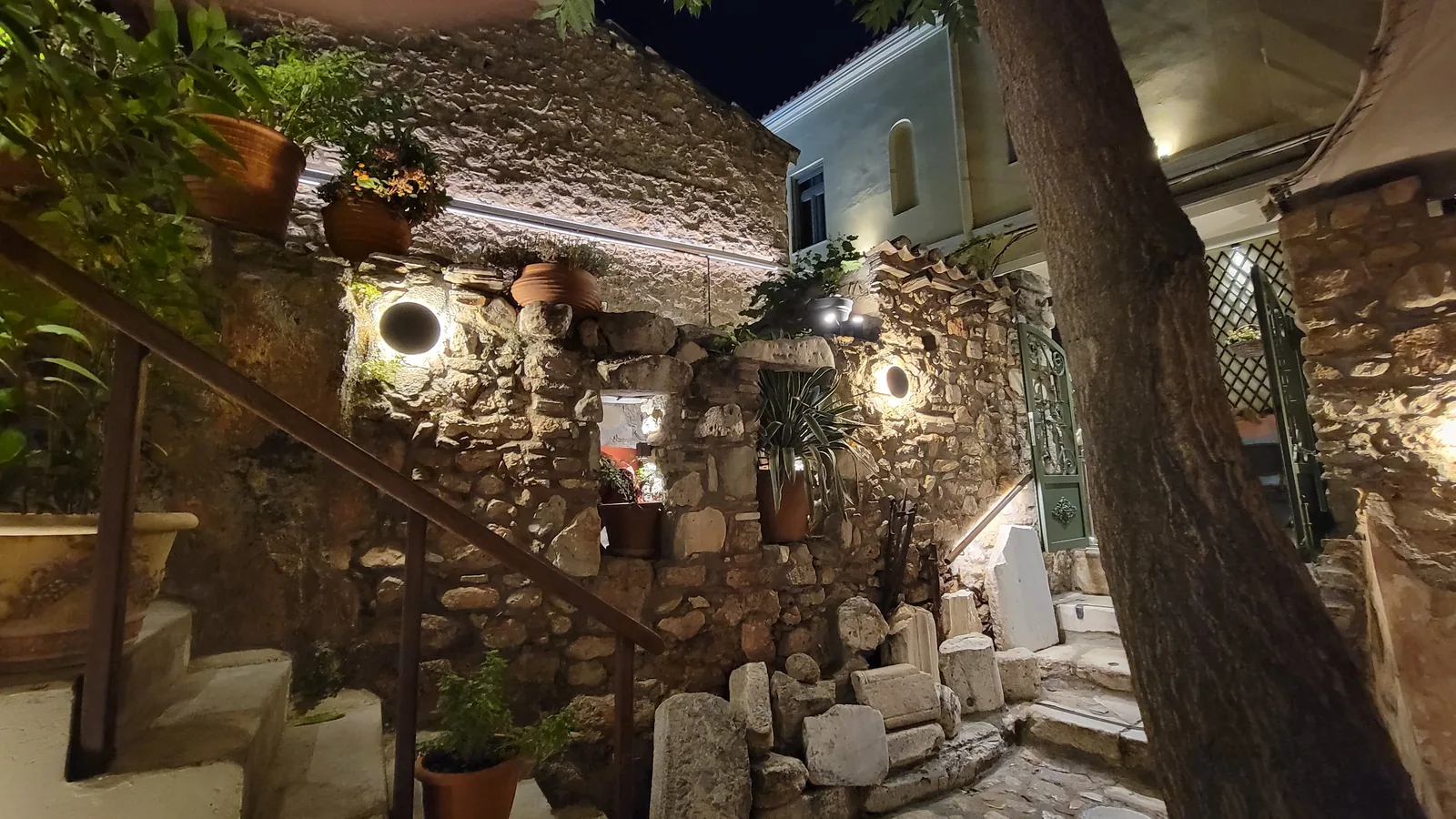
Light the stone, not the diners.
Warmth at three heights
Above that, warm fairy lights are wound up the palm by the entrance and threaded along the canopy edge, giving the courtyard a high layer of sparkle with almost no measurable output — decoration doing the work of atmosphere rather than illumination. At the table, settings carry their own cordless lamps, so the light level does not depend on where a table happens to sit relative to a wall fixture. Three heights of warm light, none of them bright, and the courtyard reads as somewhere discovered rather than designed.
The street terrace
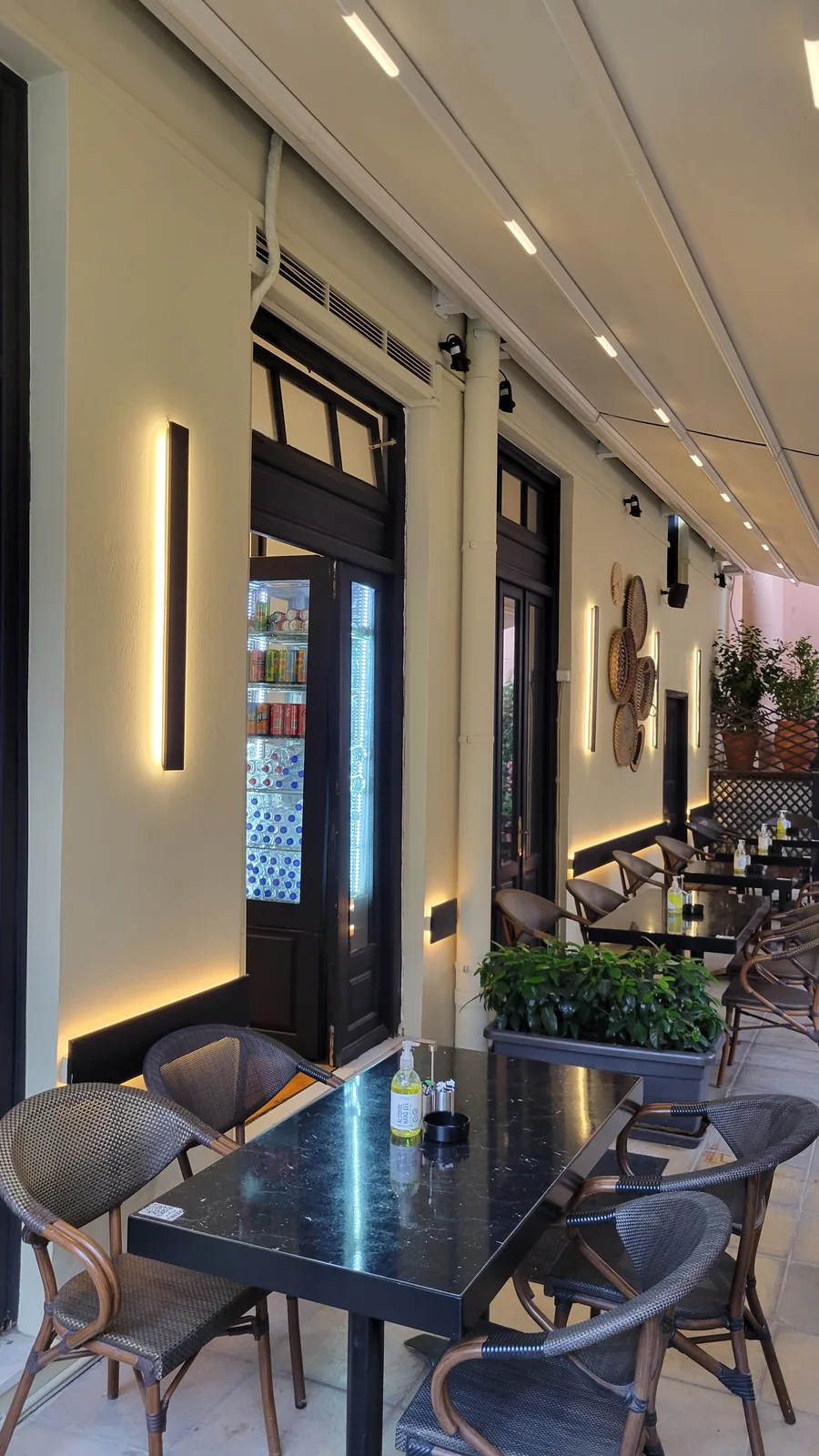
Out front, facing the street, the language changes on purpose. Slim vertical sconces sit on the plastered wall and a single warm line of light runs beneath the canopy edge — clean, modern and linear. It is a counterpoint rather than a contradiction: stepping through the gate from that crisp terrace into the grazed stone of the courtyard makes the old building feel older still.