The terrace
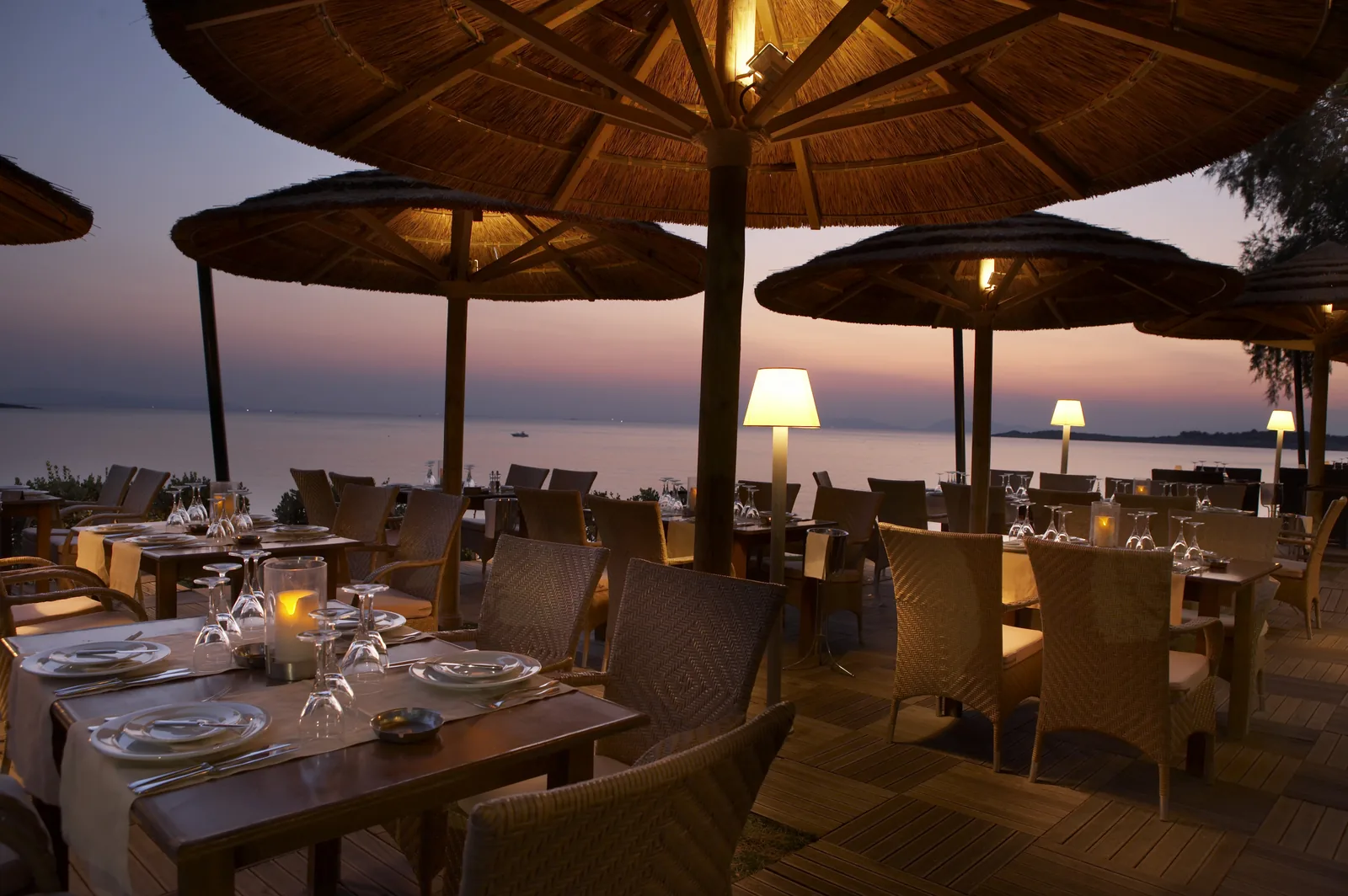
Notos is a seaside restaurant at Voula, its terrace laid out under thatched parasols on timber decking with the Saronic Gulf directly in front. The sunset is the reason people book the table, and it sets the ceiling on every light level out there: whatever is installed has to stay dimmer than the sky for the first hour of service, then take over gently as the sky goes out.
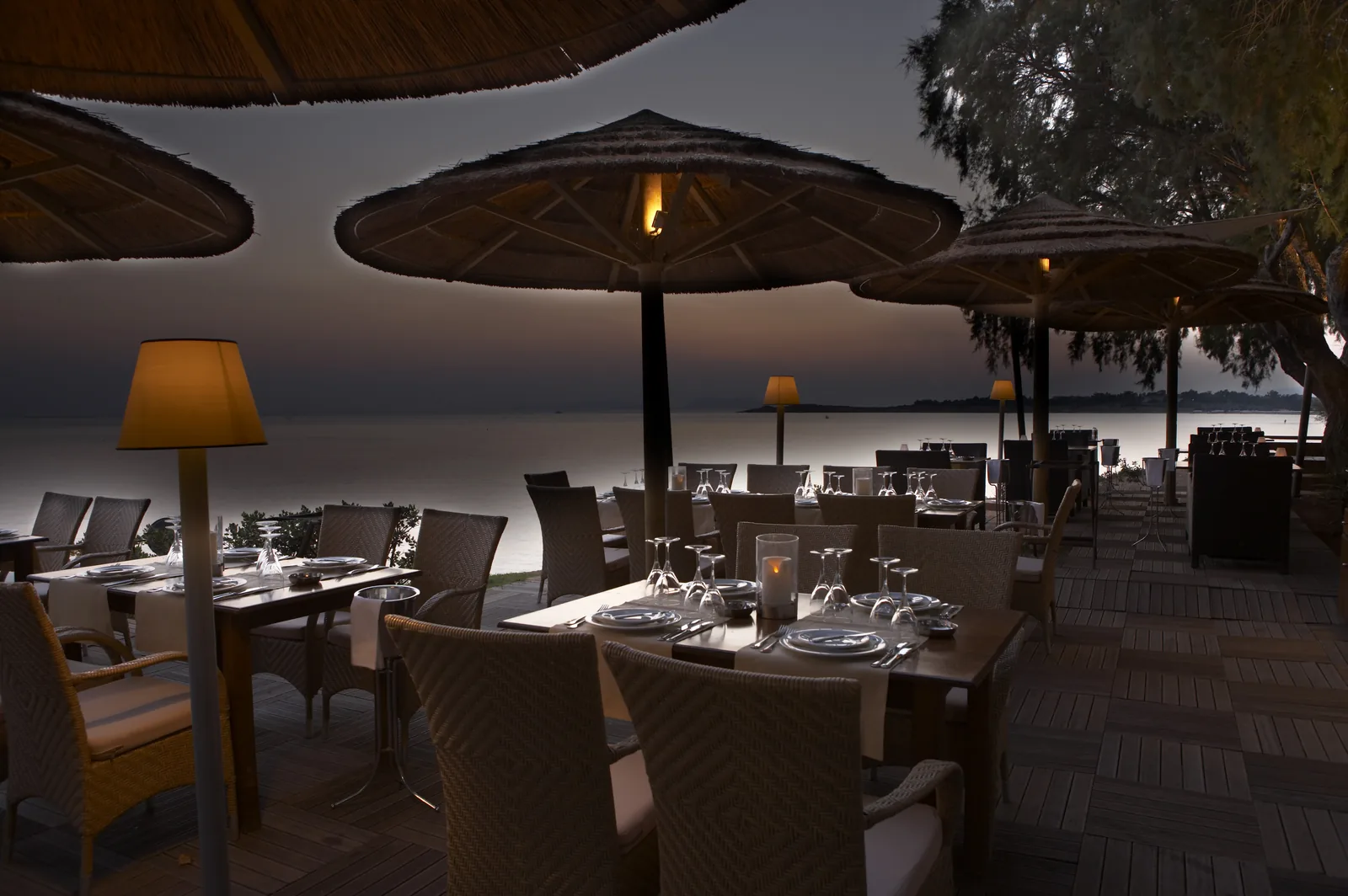
How the terrace is lit
Nothing on the terrace lights the space from above in the conventional sense. Small warm spots are mounted on each parasol pole and throw light up into the thatch, so the canopy itself becomes the source — a soft, broad glow with no visible lamp and no glare for anyone looking out to sea. Between the tables, freestanding floor lamps with shades sit at roughly seated eye height and do most of the practical work.
A scheme defined more by what was left dark than by what was installed.
Letting the horizon win
On the tables, glass votives hold the foreground at very low output. The cumulative effect is a terrace where the brightest thing in view is always the sea and the sky — light is placed behind and beside the guest rather than in front, so nothing sits between the eye and the horizon. It is a scheme defined more by what was left dark than by what was installed.
Indoors
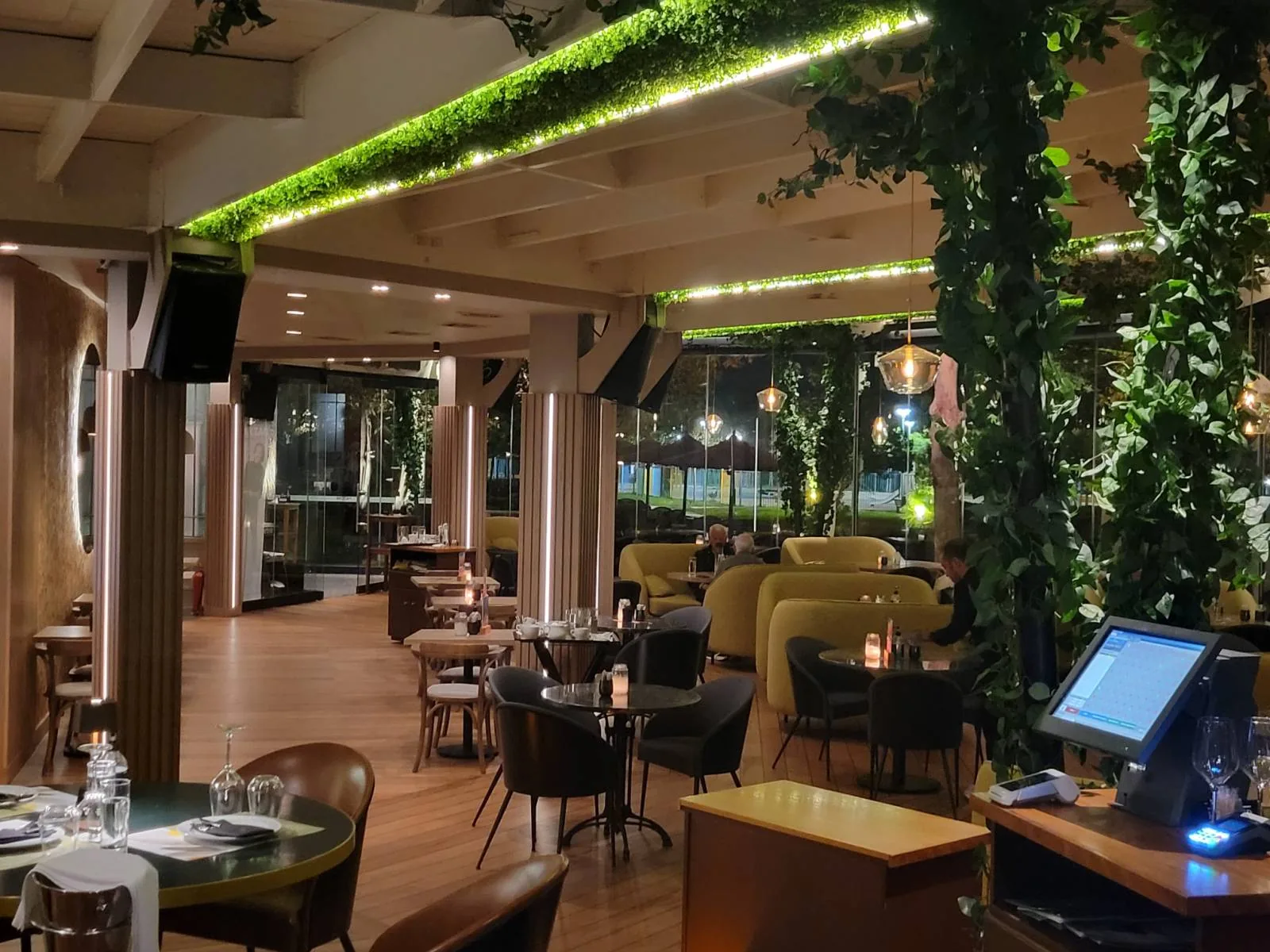
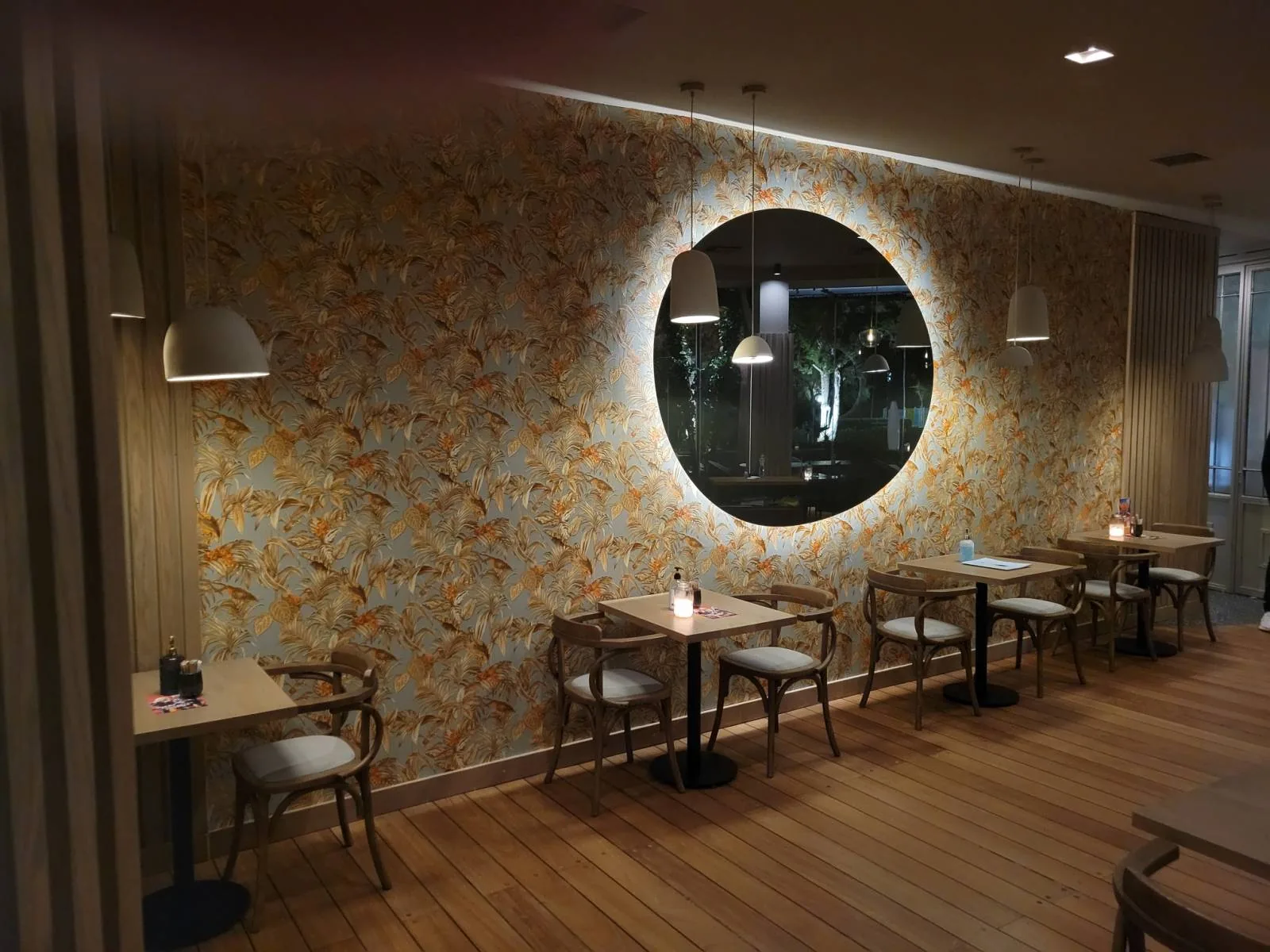
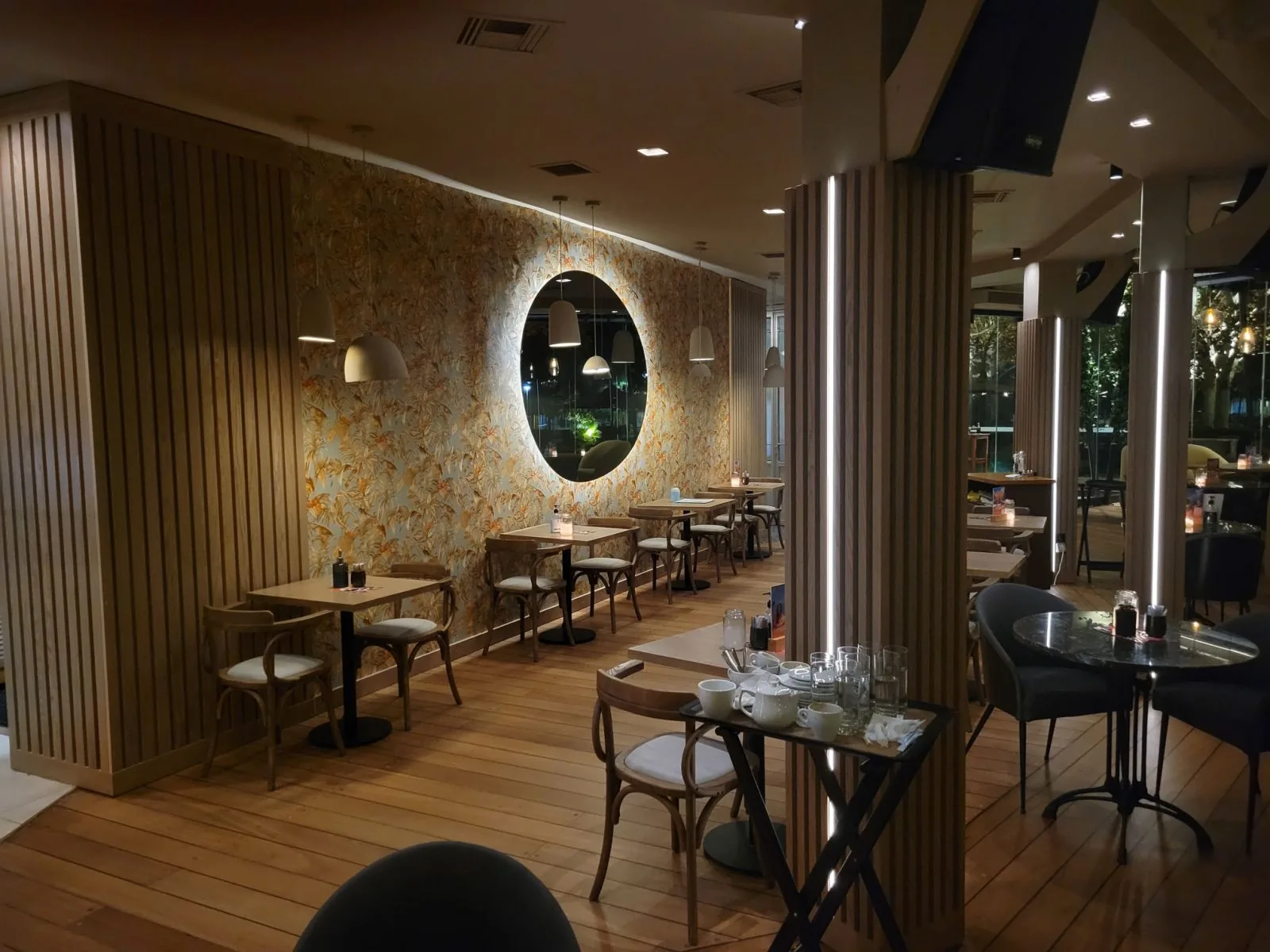
Inside, with no horizon to defer to, the scheme turns more decorative. In one room a ceiling of trailing greenery is lit from within, so the planting glows green overhead while climbing plants carry it down the columns. In another, a large circular mirror is backlit so a halo of light surrounds it against the botanical wallpaper, with dome pendants over the tables and slim vertical lines of light set into the timber columns.